
Key Highlights
- Understand when to begin planning for international admissions
- Learn the ideal timeline for applications, tests, documents, scholarships, and visas
- Know how early preparation improves admission and visa success
- Avoid common delays that affect global education plans
- Get a clear month-wise admission planning checklist
- Build a stronger study abroad profile with expert counselling support
Table of Contents
- Introduction
- About Us
- Why Should Students Understand Admission Timelines Early?
- When Should Students Start Preparing for Study Abroad Applications?
- What Are the Key Stages in the Global Admission Timeline?
- How Can Students Plan Tests, Documents, and Scholarships on Time?
- What Mistakes Should Students Avoid During Admission Planning?
- Month-wise Admission Timeline Chart
- Conclusion
- FAQs
Introduction:
Planning to study abroad is not a last-minute decision. It is a structured journey that requires academic preparation, test planning, document readiness, university shortlisting, application submissions, scholarship research, visa filing, and pre-departure arrangements. At Glomind Overseas, the Top Abroad Consultancy in Hydrabad where many students focus only on selecting a country or university, but the real success of an international education plan depends on following the right admission timeline. A missed deadline can mean losing a preferred intake, scholarship opportunity, or even a visa slot.
About Us:
Glomind Overseas helps students plan their international education journey with personalized counselling, university shortlisting, application assistance, documentation support, visa guidance, and pre-departure preparation. The team supports aspirants in understanding admission timelines, choosing the right intake, preparing strong applications, and avoiding delays. With destination-specific knowledge and a student-first approach, Glomind Overseas guides learners toward making confident decisions for a successful study abroad experience.
Why Should Students Understand Admission Timelines Early?
Admission timelines are important because every country, university, and course may follow different deadlines. Some universities close applications almost a year before the course begins, while others may accept applications closer to the intake. However, waiting until the last moment can reduce options.
Early timeline planning helps students:
- Apply to better universities
- Improve test scores if needed
- Prepare stronger SOPs and LORs
- Apply for scholarships before deadlines
- Arrange financial documents smoothly
- Complete visa formalities on time
- Avoid stress during peak admission seasons
Just like students are encouraged to explore future choices after major academic milestones, international education planning also requires thoughtful decision-making and early preparation. The goal is not only to apply but to apply with clarity, confidence, and complete readiness.
When Should Students Start Preparing for Study Abroad Applications?
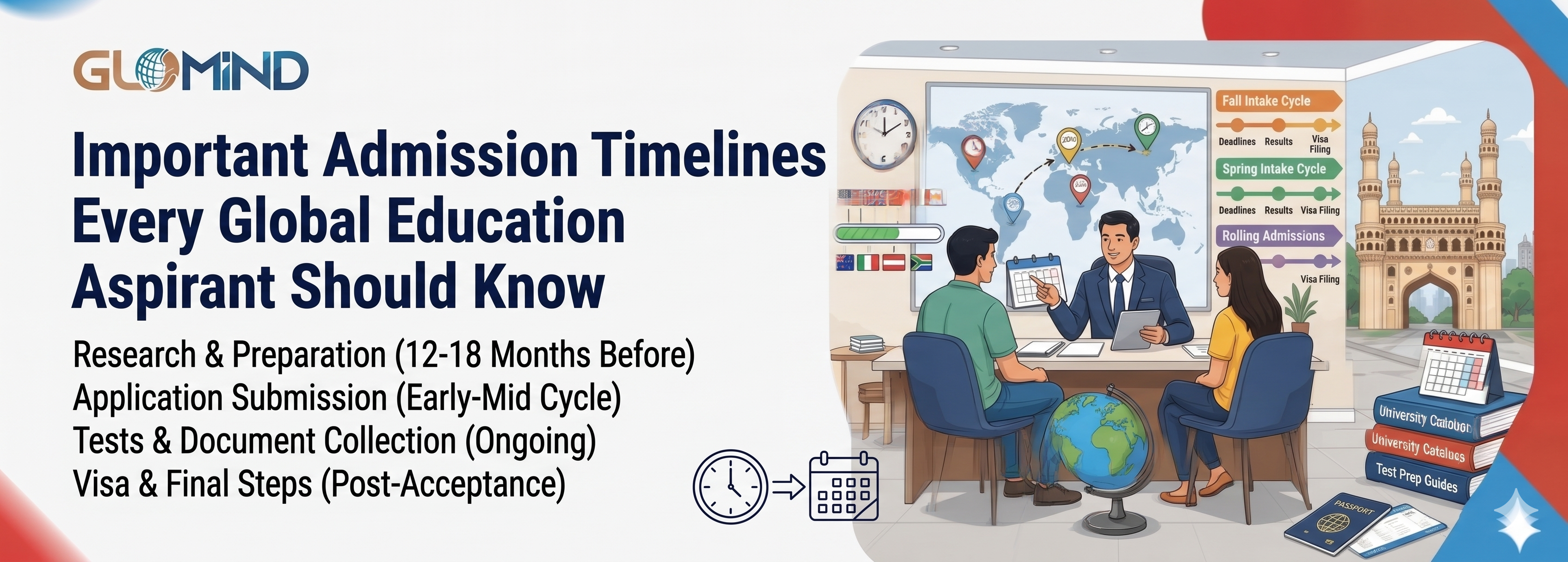
Students should ideally begin planning 12 to 18 months before their intended intake. This gives enough time for research, counselling, test preparation, profile building, and documentation. For competitive destinations and programs, early planning becomes even more important.
Ideal Planning Window
| Timeline Before Intake | What Students Should Do |
| 18–12 Months Before | Career counselling, destination research, course selection |
| 12–10 Months Before | Test preparation, university shortlisting |
| 10–8 Months Before | Appear for IELTS, TOEFL, GRE, GMAT, SAT, or PTE |
| 8–6 Months Before | Prepare SOP, LORs, resume, academic documents |
| 6–4 Months Before | Submit applications and scholarship forms |
| 4–2 Months Before | Receive offers, arrange finances, file visa |
| 2–1 Month Before | Book tickets, accommodation, pre-departure planning |
A timeline like this helps students stay organized and reduces the risk of missing important steps.
What Are the Key Stages in the Global Admission Timeline?
Every student’s journey may differ, but most international admission processes follow a similar structure. Understanding these stages helps applicants move step by step instead of feeling overwhelmed.
Key Admission Stages
- Profile Evaluation:
Students should begin by understanding their academic background, interests, strengths, career goals, and preferred destinations. - University and Course Shortlisting:
The right course should match the student’s career plan, budget, eligibility, and long-term employment opportunities. - Test Preparation:
English proficiency tests and entrance exams require preparation time. Students should take tests early so they can retake them if needed. - Document Preparation:
Academic transcripts, mark sheets, passport, SOPs, LORs, resume, financial records, and certificates should be prepared before applications open. - Application Submission:
Universities may have priority deadlines, regular deadlines, and scholarship deadlines. Students should track all dates carefully. - Visa Filing:
Visa applications require financial proof, offer letters, identity documents, and sometimes medical or biometric requirements.
How Can Students Plan Tests, Documents, and Scholarships on Time?
Test scores, documents, and scholarships are three areas where many students lose valuable time. These should be planned together instead of separately.
Test Planning
Students should:
- Select the required test based on country and university
- Book test dates early
- Keep time for retesting
- Send official scores before deadlines
- Check score validity
Document Planning
Important documents include:
- Passport
- Class 10 and 12 mark sheets
- Graduation transcripts
- Degree or provisional certificate
- SOP
- LORs
- Resume
- Work experience letters, if applicable
- Financial documents
- Passport-size photographs
Scholarship Planning
Scholarship deadlines may close earlier than admission deadlines. Students should check:
- Merit-based scholarships
- Need-based financial aid
- Early applicant scholarships
- Country-specific scholarships
- Course-specific funding options
Strong planning improves both affordability and admission success.
What Mistakes Should Students Avoid During Admission Planning?
Many students make avoidable mistakes because they underestimate the time needed for applications and visas.
Common Timeline Mistakes
| Mistake | Possible Impact |
| Starting too late | Fewer university options |
| Missing test deadlines | Delayed applications |
| Weak SOP preparation | Lower admission chances |
| Ignoring scholarship dates | Higher financial burden |
| Late visa filing | Intake deferment risk |
| Incomplete documents | Application rejection or delay |
Students should maintain a deadline tracker and review it weekly. Expert counselling can also help students avoid errors by creating a personalized application calendar.
Conclusion:
Admission timelines are one of the most important parts of a successful study abroad journey. Students who start early have better control over university selection, test scores, documents, scholarships, and visa processes. Early planning also gives students time to improve their profile and make informed decisions without pressure.
A clear timeline turns a complicated process into a manageable journey. With proper guidance, students can avoid missed deadlines, strengthen their applications, and move closer to their dream of international education with confidence.
FAQs:
- How does Glomind Overseas help students track admission timelines?
Glomind Overseas creates a clear timeline for tests, applications, documents, scholarships, and visas. - When should students contact Glomind Overseas for admission planning?
Students should contact Glomind Overseas 12 to 18 months before their preferred intake. - Does Glomind Overseas help with intake selection?
Yes, Glomind Overseas guides students on Fall, Spring, Summer, and country-specific intakes. - Can Glomind Overseas prevent missed deadlines?
Glomind Overseas helps students plan early and submit applications before priority deadlines. - Does Glomind Overseas guide students on scholarship timelines?
Yes, Glomind Overseas helps students apply for scholarships within the correct time frame. - Why is Glomind Overseas helpful for timeline planning?
Glomind Overseas simplifies the admission journey with structured counselling and deadline-based support.
